How engineers saved the toppled 600 tonne, 115‑year‑old Bark Europa
The real economic cost of corrosion failure
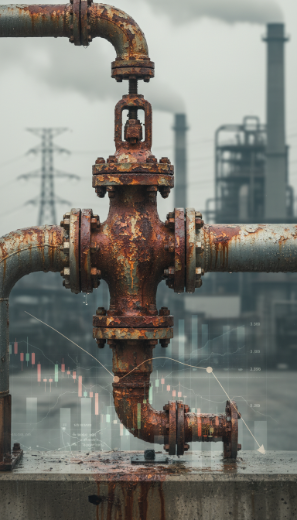
In a world fixated on spectacular failures, corrosion is easy to overlook. But, according to The NACE IMPACT study, the estimated global cost of corrosion is US$2.55 trillion or 3.4% of the global GDP. Craig Botha, CEO of Re:Ignite, says for engineers, claims specialists, lawyers and financiers, that is not a nuisance cost, it is a structural drag on economic performance.
Speaking at the second annual African Root Cause Analysis conference held in Stellenbosch, Conference Director and disaster and risk management consultant at One Eighty Materials Engineering Solutions, Antonio Massella set the scene for Botha’s keynote address saying: “Corrosion remains one of the most expensive and underestimated threats to infrastructure globally. Poor corrosion management can shorten asset life dramatically and expose organisations to billions of dollars in capital risk.”
The aim of the second African Root Cause Analysis (RCA) annual conference was to explore how engineering decisions, materials engineering, legal insight and insurance strategy can collaborate to mitigate the risks associated with rapid industrialisation across Africa. Additionally, the conference serves as a platform to bring together an ecosystem of professionals to share knowledge, helping industries understand failures and prevent risks in major projects.
Botha went on to explain that corrosion is still widely treated as a background maintenance headache, one which is unsightly, inevitable and best handled by squeezing budgets and doing “just enough” to keep assets in service.
However, he says when analysts take a deeper look at the numbers, mechanisms and failure patterns, corrosion emerges as a core root cause driver of technical, financial and legal crises across the infrastructure value chain.
Botha said that the first mental shift the industry needs is to stop treating corrosion solely as an operating expense, mentioning that when it is handled as a maintenance line item, it is the first target when organisations are under margin pressure.
While these decisions can deliver short‑term savings to the income statement, they also accelerate physical deterioration and shrink the full economic life of the asset.
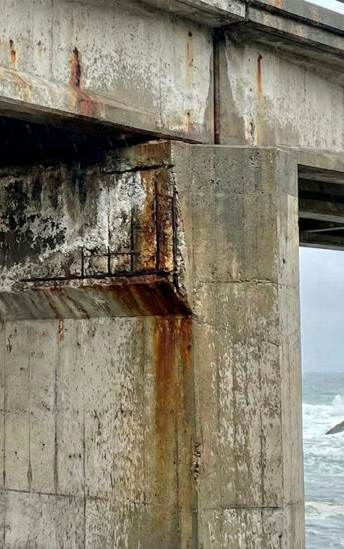
“The consequence is that what should have been a 30‑ to 50‑year asset quietly becomes a 5‑ to 20‑year asset. The eventual failure is then labelled an ‘incident’, but the real failure took place long before, at the point where corrosion was misclassified, under‑specified and under‑governed,” he warned.
The problem is felt across the value chain
The impact of this oversight can be felt at every point in the value chain. Botha shared that asset owners bear the direct operational cost through unplanned shutdowns, emergency repairs, lost throughput and forced capital expenditure. Their financial statements reflect this in accelerated depreciation, impairments and reduced returns on invested capital.
They are not alone.
Underwriters see corrosion as a chronic driver of large, complex claims that are difficult to model, leading to volatility in premiums and pressure on margins.
For project financiers, each high‑profile corrosion‑linked failure undermines confidence in the underlying asset class, increases risk premiums and can by itself trigger covenant breaches or refinancing at punitive terms.
Similarly, lawyers dealing with major failures increasingly face counterparts equipped with strong technical teams and data. In addition, where contracts have vague or generic provisions around corrosion and integrity management, it becomes difficult to defend an owner’s decision or allocate liability reliably.
It is important to remember that the costs are also seen at a societal level, and Botha says a single integrity failure on a pipeline, tank farm or structural system can destroy homes, displace communities, contaminate ecosystems and erode trust in public and private institutions.
“In practice, one leak really can lead to one spark and one headline that reshapes regulatory, political and financial attitudes toward an entire sector,” he warned.
Treating the root cause of the problem
Botha strongly advocated that if corrosion is to be treated as a true root cause issue, the industry’s response must begin at the front end of the project lifecycle, explaining that generic corrosion management documents that are lightly edited from job to job are no longer sufficient.
He says each project requires a corrosion strategy that is specific to its environment, operating conditions and risk profile. That means rigorous material selection, appropriate coating and lining systems, and well‑designed cathodic protection.
It also means designing inspection and monitoring systems that are genuinely fit for purpose in the field, validated against real conditions rather than assumed ones.
Equally important is the role of the gatekeepers of capital and licence and he advocates for strong regulators, clear standards and enforceable reporting obligations.
Botha recommended embedding corrosion management into credit policies and due‑diligence checklists, and adds that insurers can sharpen their approach by linking coverage terms and limits to tangible evidence of corrosion control, loss history and continuous monitoring.
Africa stands to lose if we don’t act
Botha says the urgency to act is magnified in growth markets, particularly in Africa, highlighting that the continent faces an enormous infrastructure gap over the next two decades.
Using the well-known business consultancy firm McKinsey’s reporting numbers, Botha quoted the projected infrastructure investment in Africa between 2025 and 2040 at US$5 trillion. Using the cost of corrosion of the NACE study (3.4% of GDP), he estimated corrosion would cost Africa’s projected US$5.6 trillion economy over US$190 billion annually by 2040.
He argues that new pipelines, power grids, water systems, rail networks and renewable installations will be built at unprecedented scale, saying: “If these assets are delivered using the same corrosion practices that have historically consumed several percent of global GDP, a significant share of Africa’s future capital spend will be silently eroded long before design life is reached. Conversely, if corrosion is treated as a central design, finance and governance question, that same spend can yield longer‑lived, safer and more bankable infrastructure.”
Botha concluded by acknowledging that corrosion will always be with us. However, he believes the question is whether it remains an unexamined background cost (a quiet 3.4% tax on GDP), or whether it is finally recognised as a root cause driver of failure, dealt with across the supply chain. Only then, he suggested, will we truly see “the true cost of corrosion” fall. Not as a matter of luck, but by conscious design from day one.

About One Eighty Degrees
One Eighty Degrees is a global materials engineering and metallurgy firm. Founded in South Africa in 2002, the company has grown into Africa’s most widely scoped ISO 17025:2017 accredited materials and metallurgical testing laboratory, serving over 1,400 clients worldwide. The company provides advanced metallurgical testing, materials engineering and consulting, and failure investigation services that help organisations solve complex product and process challenges efficiently and cost‑effectively. As a Bureau Veritas Marine and Offshore–approved laboratory, and the only materials testing lab in Africa that is a SASSDA member, One Eighty combines rigorous quality, deep technical expertise and innovative problem-solving to deliver reliable, decision-ready insights across multiple industries. Guided by its vision to become Africa’s preferred partner for materials engineering solutions, the company is committed to driving sustainable growth and development across the continent.
Related Posts